LED Light Therapy for Skin: Red Light vs. Blue Light Explained
LED Light Therapy for Skin:
Red Light vs. Blue Light
Explained
LED light therapy has quietly become one of the most versatile and science-backed treatments in modern skincare. It's painless, requires zero downtime, and works at the cellular level to address everything from acne to aging. But with different colors doing very different things, it helps to understand exactly how each wavelength works — and which one is right for your skin. Here's the complete guide from the team at Splendid Skincare & Brow Studio.
How LED Light Therapy Works
LED (Light Emitting Diode) therapy works through a process called photobiomodulation — a technical term for using specific wavelengths of light to trigger beneficial biological responses in your cells. Different wavelengths penetrate to different depths in the skin and interact with different cellular targets, producing distinct therapeutic effects.
When LED light reaches your skin cells, it's absorbed by chromophores — light-sensitive molecules within the cells. This absorption triggers a cascade of cellular events: increased ATP (energy) production, enhanced collagen synthesis, reduced inflammation, and — in the case of blue light — destruction of acne-causing bacteria. The process is entirely non-thermal, meaning it doesn't heat or damage tissue. It simply gives your cells the energy and signals they need to function optimally.
The Light Spectrum
Tap each wavelength to learn how it interacts with your skin.
Red Light: The Anti-Aging Powerhouse
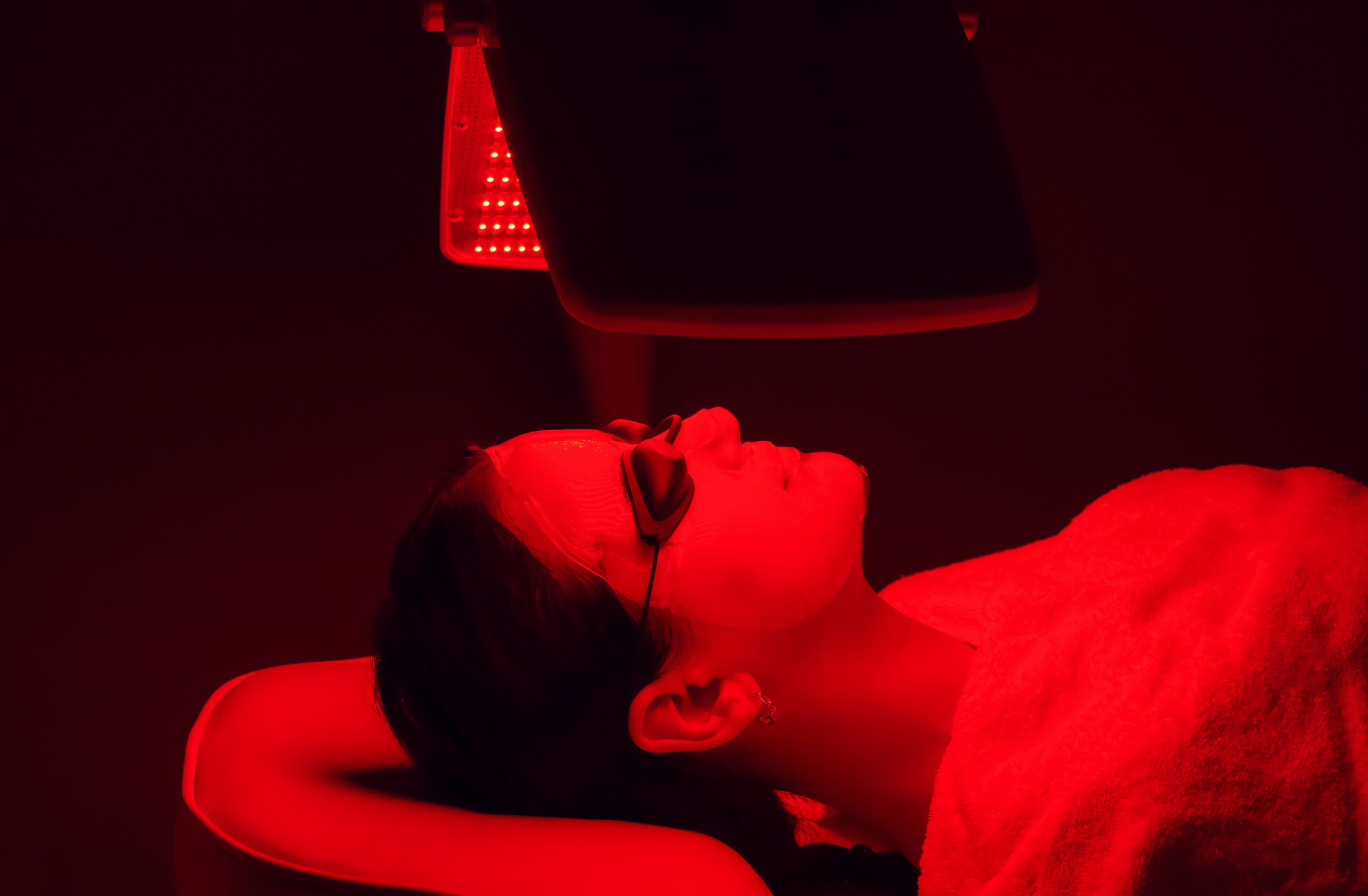
Red light therapy (typically 620–660nm) is the gold standard for anti-aging and skin rejuvenation. At this wavelength, light penetrates into the dermis — the layer where collagen and elastin are produced — and directly stimulates fibroblasts, the cells responsible for manufacturing these essential structural proteins.
The result is increased collagen production, accelerated cellular repair, and reduced inflammation. Over a series of sessions, clients see measurable improvements in fine lines, skin firmness, overall tone and texture, wound healing, and even redness from conditions like rosacea. Red light also enhances blood circulation, bringing more oxygen and nutrients to the skin's surface and creating the healthy, lit-from-within glow that our clients love.
Red light therapy is cumulative — each session builds on the last. While you may notice an immediate improvement in skin radiance after a single session, the structural anti-aging benefits (firmer skin, reduced fine lines) develop progressively over 8–12 sessions.
Blue Light: The Acne Fighter
Blue light therapy (typically 405–420nm) targets a very specific problem: the bacteria that cause acne. Propionibacterium acnes (P. acnes), the bacteria responsible for inflammatory breakouts, produces a naturally occurring molecule called porphyrin. When blue light hits porphyrins, it triggers a photochemical reaction that generates reactive oxygen species — effectively destroying the bacteria from within.
This makes blue light one of the most targeted, drug-free approaches to managing acne. Unlike antibiotics (which can create resistance over time) or harsh topicals (which can irritate the skin), blue light eliminates acne bacteria without affecting surrounding healthy tissue. It also helps reduce the inflammation that makes breakouts red, swollen, and painful.
Blue light is particularly effective for mild-to-moderate inflammatory acne and is often used alongside other treatments — chemical peels, targeted facials, or red light therapy — for a comprehensive acne management approach.
I finally have a skincare regimen that is perfectly tailored to meet my needs.
— Gennieve, Splendid Skincare ClientNear-Infrared: The Deep Healer
Near-infrared light (typically 800–880nm) is invisible to the naked eye but penetrates deeper than any visible wavelength — reaching past the dermis into subcutaneous tissue, muscle, and even bone. At this depth, it promotes deep tissue healing, reduces systemic inflammation, and enhances cellular repair at a level that visible light simply can't reach.
In skincare, near-infrared is especially valuable for post-treatment recovery (accelerating healing after microneedling, peels, or laser), reducing deep inflammation, and enhancing the effects of red light therapy when the two are used together. Many professional LED panels combine red and near-infrared wavelengths for this reason — the red works on the visible skin layers while the near-infrared addresses deeper structures simultaneously.
Red vs. Blue: Side by Side
Red Light Therapy (630nm)
Blue Light Therapy (415nm)
Which Light Is Right for You?
Select your primary concern to get a personalized recommendation.
Getting Started with LED Therapy
One of the best things about LED light therapy is its accessibility. There are no prerequisites, no special preparation, and no recovery needed. You can add it to virtually any other facial treatment, or enjoy it as a relaxing standalone session. Many of our clients describe the warm light panels as meditative — it's 20–30 minutes of pure relaxation while your skin does the work.
For optimal results, we typically recommend a series of sessions: 2–3 per week for the first 4–6 weeks for intensive results, then tapering to monthly maintenance sessions. Your esthetician at Splendid Skincare will design a protocol based on your specific concerns and how your skin responds.
LED therapy also makes an exceptional complement to other treatments. Adding red light after microneedling accelerates healing and boosts collagen production. Blue light before a facial helps manage active acne. And near-infrared after a chemical peel reduces inflammation and speeds recovery. It's the ultimate enhancer for your entire skincare strategy.
Frequently Asked Questions
Let Us Work Our Magic
Ready to harness the power of light? Book an LED therapy session at Splendid Skincare & Brow Studio today.
Book an Appointment